In brief
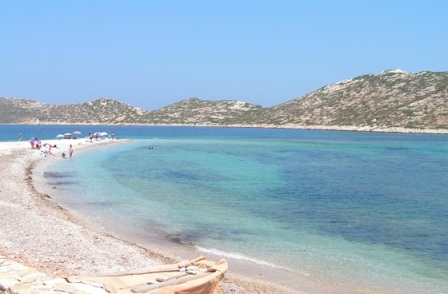
These quintessentially Greek islands glow with bare sunbaked rocks, spectacular sunsets, blindingly white houses, dazzling aquamarine seas and partying till the sun wakes up. Mykonos, Santorini and Ios offer hedonism and hangovers - but sidestep just a little to Andros, Serifos or Sifnos and you will be rewarded with unspoilt shores, countryside paths, whitewashed villages and lip-smacking traditional fare.
General Information
The Cyclades: a circle of islands; a circle of civilization whose beginnings are lost in the mists of time, when the Ancient Cycladic people fashioned the first stone weapons, when the first marble idol was made, when their primitive boats traveled from island to island.
There are thirty-four islands and an infinity of tiny rocky islets, remnants of geological upheavals in millennium gone by, pieces of a stony area in the middle of the Aegean.
These quintessentially Greek islands glow with bare sunbaked rocks, spectacular sunsets, blindingly white houses, dazzling aquamarine seas and partying till the sun wakes up. Mykonos, Santorini and Ios offer hedonism and hangovers - but sidestep just a little to Andros, Serifos or Sifnos and you will be rewarded with unspoilt shores, countryside paths, whitewashed villages and lip-smacking traditional fare.
General Information
The Cyclades: a circle of islands; a circle of civilization whose beginnings are lost in the mists of time, when the Ancient Cycladic people fashioned the first stone weapons, when the first marble idol was made, when their primitive boats traveled from island to island.
There are thirty-four islands and an infinity of tiny rocky islets, remnants of geological upheavals in millennium gone by, pieces of a stony area in the middle of the Aegean.
It was to here, the center of the circle, Delos, that Leto fled, pursued by a jealous Hera, to give birth to Zeus’s offspring, Artemis and Apollo. Thus Delos became the first sacred island, dedicated to the worship of Apollo, an important religious center, and the headquarters of the common Treasury of the Greeks. Its citizens did not take part in the wars of the neighboring islands, which for many years respected the neutrality of Delos and its sacred character. And they filled it with works of art.
Around it, each island constituted a separate state and wrote its own history. Milos traded its obsidian, that hard black stone, Paros its translucent marble, Serifos its copper, and Amorgos the marvelous weapons crafted by its inhabitants.
These small islands saw the birth and death of whole civilizations. On the island that spawned the volcano, the first inhabitants of Santorini built cities that sank beneath the sea with the great eruption that changed the face of the Aegean, while on Kea the elders killed themselves during a siege so that the young would have more food.
The years rolled by. On the island of Milos, beloved of Aphrodite, pirates stole out to sell their treasure and Kea with the other islands was laid waste by Khaireddin Barbarossa. Still, the spirit of the Cyclades, their magical atmosphere, their unique art continued from age to age, from generation to generation.
Around it, each island constituted a separate state and wrote its own history. Milos traded its obsidian, that hard black stone, Paros its translucent marble, Serifos its copper, and Amorgos the marvelous weapons crafted by its inhabitants.
These small islands saw the birth and death of whole civilizations. On the island that spawned the volcano, the first inhabitants of Santorini built cities that sank beneath the sea with the great eruption that changed the face of the Aegean, while on Kea the elders killed themselves during a siege so that the young would have more food.
The years rolled by. On the island of Milos, beloved of Aphrodite, pirates stole out to sell their treasure and Kea with the other islands was laid waste by Khaireddin Barbarossa. Still, the spirit of the Cyclades, their magical atmosphere, their unique art continued from age to age, from generation to generation.
After thousands of years of history, the Cyclades are more beautiful than ever, surrounded by the blue Aegean, with their shady archways and their white houses, built in circles around the main square.
What is it that made those simple islanders such great architects, such astute town planners? Perhaps they were inspired by their exceptional surroundings, the rocks and the sea, or perhaps they were imbued with the spirit of Apollo.
Sightseeing & Main Attractions
Santorini (Thira)
Santorini (officially known as Thira) is regarded as the most spectacular of all the Greek islands. And no wonder - its submerged caldera (crater) alone is enough to warrant the spotlight, let alone its postcard images of whitewashed churches and bougainvillea-clad houses set against blue sea and sky. Santorini's spectacular caldera is a vestige of what was probably the biggest volcanic eruption in recorded history, believed by some myth-makers to have caused the disappearance of Atlantis.
Mykonos
The undisputed party capital of Greece, Mykonos attracts visitors of all persuasions who love the nightlife and the disco round. It's the most pretentious and pricey of the Greek islands, so don't come to Mykonos if you're looking for unspoilt island beauty or authentic cuisine. Mykonos has a couple of decent beaches, and is the jumping-off point for the sacred island of Delos, but the real reason people come here is to pose and party all day & night.
The undisputed party capital of Greece, Mykonos attracts visitors of all persuasions who love the nightlife and the disco round. It's the most pretentious and pricey of the Greek islands, so don't come to Mykonos if you're looking for unspoilt island beauty or authentic cuisine. Mykonos has a couple of decent beaches, and is the jumping-off point for the sacred island of Delos, but the real reason people come here is to pose and party all day & night.
Naxos
Naxos is the biggest island in the Cyclades, as well as the most fertile. Its rugged mountains and lush green valley are cloaked with olives, grapes, figs and citrus trees, making it also one of the most beautiful islands in the chain. Naxos was an important Byzantine centre, and the island is dotted with more than 500 churches and monasteries, many boasting notable frescoes. It's also a terrific island to explore on foot, as an ancient network of country pathways links its villages and churches.
Naxos is the biggest island in the Cyclades, as well as the most fertile. Its rugged mountains and lush green valley are cloaked with olives, grapes, figs and citrus trees, making it also one of the most beautiful islands in the chain. Naxos was an important Byzantine centre, and the island is dotted with more than 500 churches and monasteries, many boasting notable frescoes. It's also a terrific island to explore on foot, as an ancient network of country pathways links its villages and churches.
Paros
Pretty Paros' softly contoured hills are the source of the island's famously pure white marble, which brought it prosperity from the Early Cycladic period onwards; both the Venus de Milo and Napoleon's tomb were carved from Parian marble. Paros is now more famous as the main ferry hub for the Greek islands.
Pretty Paros' softly contoured hills are the source of the island's famously pure white marble, which brought it prosperity from the Early Cycladic period onwards; both the Venus de Milo and Napoleon's tomb were carved from Parian marble. Paros is now more famous as the main ferry hub for the Greek islands.
Ios
Sultry Ios sizzles with sun, sea and sex. People stop by to party hard, but the island also offers plenty of quiet beauty to explore. Hora is a charming village filled with myriad laneways and cute houses and shops. By day you can dive, windsurf or water-ski; if you're of the teenage-to-twenties alcohol-swilling persuasion, night time will find you partying in Hora's tiny central square.
Sultry Ios sizzles with sun, sea and sex. People stop by to party hard, but the island also offers plenty of quiet beauty to explore. Hora is a charming village filled with myriad laneways and cute houses and shops. By day you can dive, windsurf or water-ski; if you're of the teenage-to-twenties alcohol-swilling persuasion, night time will find you partying in Hora's tiny central square.
Syros
People who stop in at Syros just to change ferries are missing out: Ermoupolis, an affluent, lively place, and its wealth is evident in the many restored neoclassical mansions, marble-paved streets and chic backstreet boutiques. The city's hub is Plateia Miaouli, flanked by palm trees and open-air cafes, and dominated by the magnificent neoclassical town hall. For terrific views of the area, head up to the church of Anastasis, on top of Vrodado Hill.
People who stop in at Syros just to change ferries are missing out: Ermoupolis, an affluent, lively place, and its wealth is evident in the many restored neoclassical mansions, marble-paved streets and chic backstreet boutiques. The city's hub is Plateia Miaouli, flanked by palm trees and open-air cafes, and dominated by the magnificent neoclassical town hall. For terrific views of the area, head up to the church of Anastasis, on top of Vrodado Hill.
Sifnos
From the ferry Sifnos looks like an arid write-off, but explore just a little and you'll find an abundantly attractive landscape of terraced olive groves and almond trees, valleys filled with oleander and hills clad with wild juniper. The island is dotted with dovecotes, whitewashed houses and chapels, and it's a magical place to go walking as there are plenty of old paths linking the villages.
From the ferry Sifnos looks like an arid write-off, but explore just a little and you'll find an abundantly attractive landscape of terraced olive groves and almond trees, valleys filled with oleander and hills clad with wild juniper. The island is dotted with dovecotes, whitewashed houses and chapels, and it's a magical place to go walking as there are plenty of old paths linking the villages.
Delos
Although tiny, Delos is one of the most important archaeological sites in Greece. The sacred island is the mythical birthplace of famous twins Apollo and Artemis, and it developed as a centre of Apollo worship in the 8th century BC.
Although tiny, Delos is one of the most important archaeological sites in Greece. The sacred island is the mythical birthplace of famous twins Apollo and Artemis, and it developed as a centre of Apollo worship in the 8th century BC.
Antiparos
Antiparos used to be the quieter alternative to Paros, but now it's a busy tourist spot in its own right. Families with young kids seem to gravitate here, and cars are not allowed in the village. Buses leave from here every half-hour to the Cave of Antiparos. The cave is awe-inspiring, even though it's been looted for its stalactites and stalagmites - treasures that don't grow back, unfortunately.
Antiparos used to be the quieter alternative to Paros, but now it's a busy tourist spot in its own right. Families with young kids seem to gravitate here, and cars are not allowed in the village. Buses leave from here every half-hour to the Cave of Antiparos. The cave is awe-inspiring, even though it's been looted for its stalactites and stalagmites - treasures that don't grow back, unfortunately.
Andros
Top-notch drinking water, dovecotes, mulberry woods and nut sweets are just a few of the attractions of Andros, the northernmost island of the Cyclades and the second largest after Naxos.
Top-notch drinking water, dovecotes, mulberry woods and nut sweets are just a few of the attractions of Andros, the northernmost island of the Cyclades and the second largest after Naxos.
Amorgos
Amorgos is an enticing option for those wishing to venture off the well-worn Mykonos-Paros-Santorini route. A beautiful, unspoilt island, which is often shrouded in clouds when the rest of the island is sunny. For breathtaking views, walk from the town down the steep hillside that leads to Moni Hozoviotissis, a dazzling-white 11th-century monastery that clings precariously to the cliffside.
Amorgos is an enticing option for those wishing to venture off the well-worn Mykonos-Paros-Santorini route. A beautiful, unspoilt island, which is often shrouded in clouds when the rest of the island is sunny. For breathtaking views, walk from the town down the steep hillside that leads to Moni Hozoviotissis, a dazzling-white 11th-century monastery that clings precariously to the cliffside.
Sikinos
If you like your islands quiet and unspoilt, you'll find Sikinos fits the bill perfectly. There are plenty of nice beaches and beautiful terraced landscapes dropping down to the sea.
If you like your islands quiet and unspoilt, you'll find Sikinos fits the bill perfectly. There are plenty of nice beaches and beautiful terraced landscapes dropping down to the sea.
Folegandros
Gorgeous Folegandros bridges the gap between tourist traps and under populated islands on the brink of total abandonment. The number of visitors is increasing every year, but most locals still make a living from fishing and farming rather than serving visitors ouzo.
Activities
Most visitors to the Cyclades spend much of their time lying in the sun, beach-hopping and recovering from too much nightlife. For something a little more active, check out water sports such as windsurfing. Hrissi Akti on Paros is one of the best spots in the country to learn the sport, and other prime locations include Ormos Korthiou on Andros, Kalafatis Beach on Mykonos, Agios Giorgios Beach on Naxos and Mylopotas Beach on Ios.
Gorgeous Folegandros bridges the gap between tourist traps and under populated islands on the brink of total abandonment. The number of visitors is increasing every year, but most locals still make a living from fishing and farming rather than serving visitors ouzo.
Activities
Most visitors to the Cyclades spend much of their time lying in the sun, beach-hopping and recovering from too much nightlife. For something a little more active, check out water sports such as windsurfing. Hrissi Akti on Paros is one of the best spots in the country to learn the sport, and other prime locations include Ormos Korthiou on Andros, Kalafatis Beach on Mykonos, Agios Giorgios Beach on Naxos and Mylopotas Beach on Ios.
If you want to try a little boating, yachts and sailboats can be chartered on Paros and Syros. Paros also offers excellent water-skiing. Snorkelling is enjoyable just about anywhere in the Cyclades - an especially good place is Monastiri on Paros.
Diving is another story: to protect antiquities, any underwater activity involving breathing apparatus is forbidden, unless you're supervised by a diving school; you can find instruction in Mykonos, Santorini and Paros. For foot-on-the-ground activity, the Cyclades offer plenty of trekking opportunities, particularly on Naxos and Andros. On the smaller islands it's fun to explore and discover goat paths for yourself.
How to get there
Olympic Airways & Aegean Airlines link Athens with Naxos, Syros, Santorini, Mykonos, Paros and Milos. Santorini has direct flights to/from Mykonos, Thessaloniki, Iraklio (Crete) and Rhodes; Mykonos has flights to/from Thessaloniki and Rhodes.
Ferry routes tend to separate the Cyclades into western, northern, central and eastern subgroups. Most ferries serving the Cyclades connect one of these subgroups with Piraeus, Lavrio or Rafina on the mainland. The central Cyclades (Paros, Naxos, Ios and Santorini) are the most visited and have the best links with the mainland, usually Piraeus. The northern Cyclades (Andros, Tinos, Syros and Mykonos) also have good connections. The western Cyclades (Kea, Kythnos, Milos, Serifos, Sifnos, Folegandros and Sikinos) have less frequent connections with the mainland, and the less-visited eastern Cyclades (Anafi, Amorgos, Iraklia, Shinousa, Koufonisia and Donousa) have the fewest links. Ferries from Piraeus to Cyprus and Israel stop at Santorini and Tinos.
In summer, there are daily hydrofoils from Piraeus to Kythnos, Serifos, Sifnos, Milos and Kea; there are daily hydrofoils from Iraklio (Crete) to Santorini. Although hydrofoils can travel faster than ferries, they often take longer to get to their destination because of the many stops they make and their sensitivity to weather. Large high-speed catamarans are also very popular. Cats travel daily between Piraeus, Syros, Mykonos, Paros and Naxos; daily from Rafina to Tinos and Mykonos; weekly to Syros, Paros, Naxos and Amorgos; daily between Rafina, Tinos and Mykonos, continuing to Andros twice weekly and to Paros, Naxos and Amorgos once a week.
Getting around the Cyclades
Olympic Airways flights between Mykonos and Santorini provide the islands' only inter-island air link. There are usually relatively good ferry connections within each of the western, northern, central and eastern subgroups, but infrequent connections between the different subgroups via Paros, the ferry hub of the island group.
In summer, there are daily hydrofoils between Kythnos, Serifos, Sifnos and Milos, as well as frequent connections between Mykonos, Naxos, Paros and Syros. There are daily cats between Syros, Mykonos, Tinos, Paros, Naxos, Ios and Santorini.